
Summary
A one-week Google Ventures sprint to help city dwellers find a shelter dog that actually fits their space, schedule, and life — and to demystify the adoption process along the way.
The problem
People want to adopt, but city life makes it hard. Apartments are small, schedules are tight, and shelter listings rarely tell you whether a dog's size, energy, and personality will actually work for your lifestyle. The adoption process itself feels opaque, so well-intentioned adopters either stall or fall for dogs whose needs they can't meet.
The challenge
- Compress discovery, ideation, prototyping, and testing into five days.
- Translate provided interview notes into actionable design decisions.
- Match adopters to dogs based on lifestyle — not just looks.
- Educate first-time adopters without slowing experienced ones down.
My role
Sole UX designer running a modified GV Design Sprint: synthesised provided research into a persona and journey, facilitated Crazy 8s and storyboarding, built wireframes and a hi-fi Figma prototype, and ran usability tests with five participants — all inside one week.
Design decisions
Lifestyle-first matching

Instead of browsing endless listings, adopters answer a short set of questions about space, schedule, and experience. The tool surfaces dogs whose age, energy, and temperament fit — turning the listing wall into a curated shortlist.
Demystify the adoption path
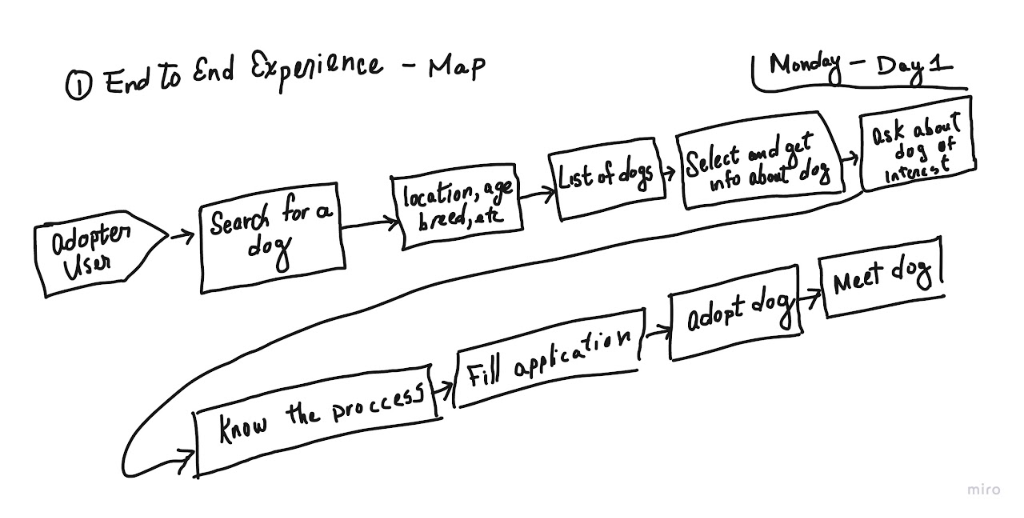
Each match shows the next concrete step — visit, application, home check — so first-time adopters always know what comes next. The unknown is the biggest reason people stall.
Start at the end
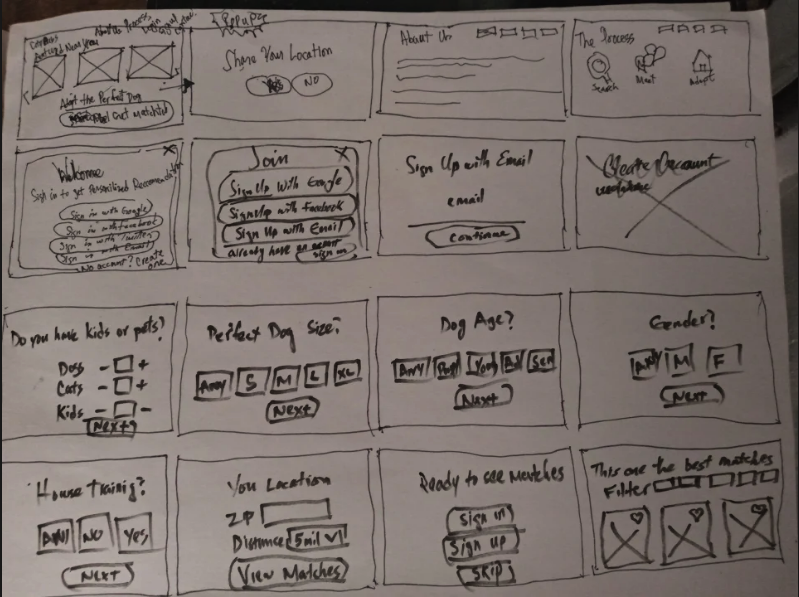
User story mapping began with the long-term goal — a happy forever home — then worked backwards. That kept the sprint focused on the critical path instead of feature creep.
System
GV Sprint, five days
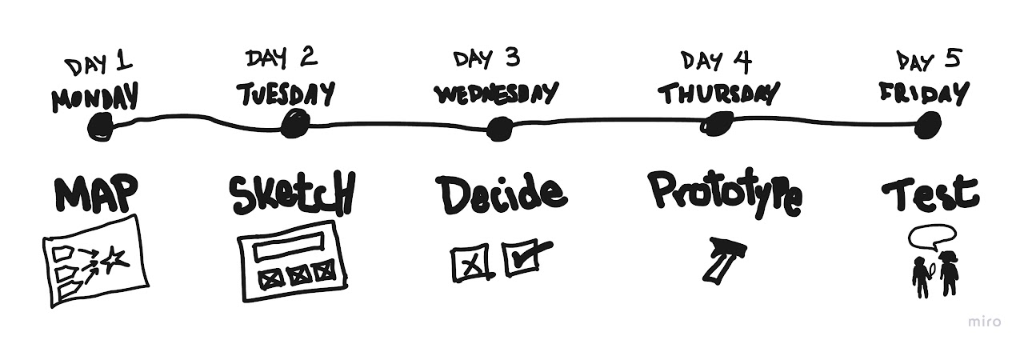
Map → Sketch → Decide → Prototype → Test. A rigid framework that forced ruthless prioritisation and kept the team aligned on the riskiest assumption.
How Might We…
Research synthesised into HMW prompts: keep users engaged, match adopter with the right dog, educate on the process, and pave a smooth handoff to local shelters.
Constraints as guardrails
Web-only platform and third-party shelter handoff were locked from day one. Naming the constraints early kept ideation grounded instead of utopian.
Interface
Lighting demos & Crazy 8s
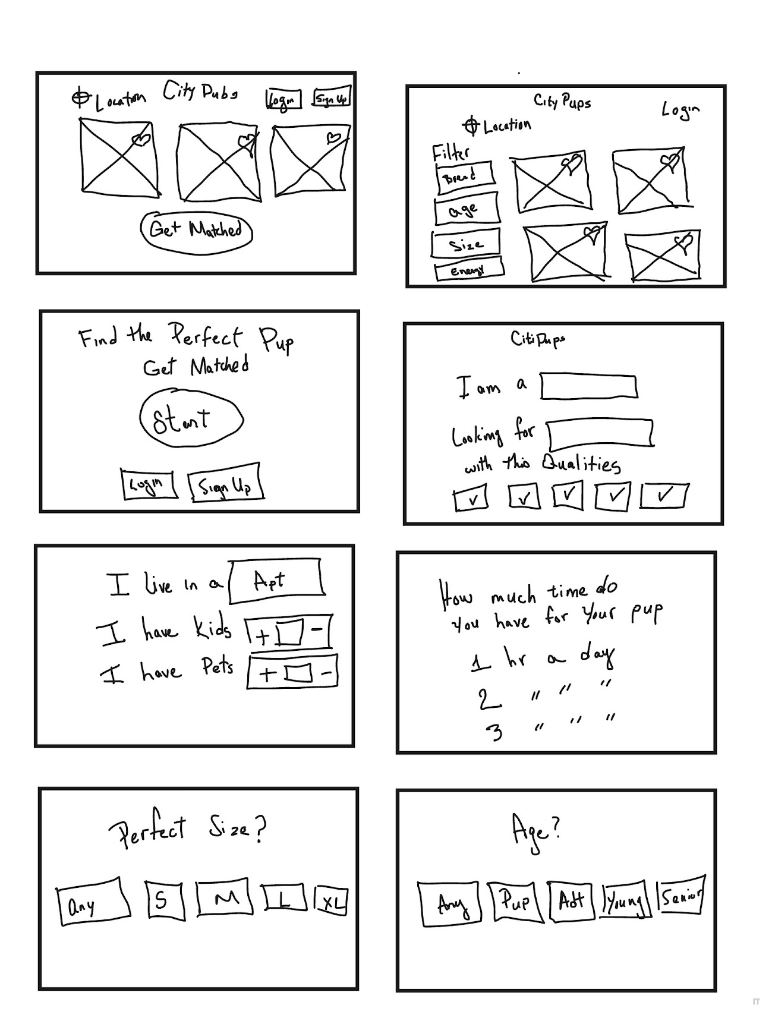
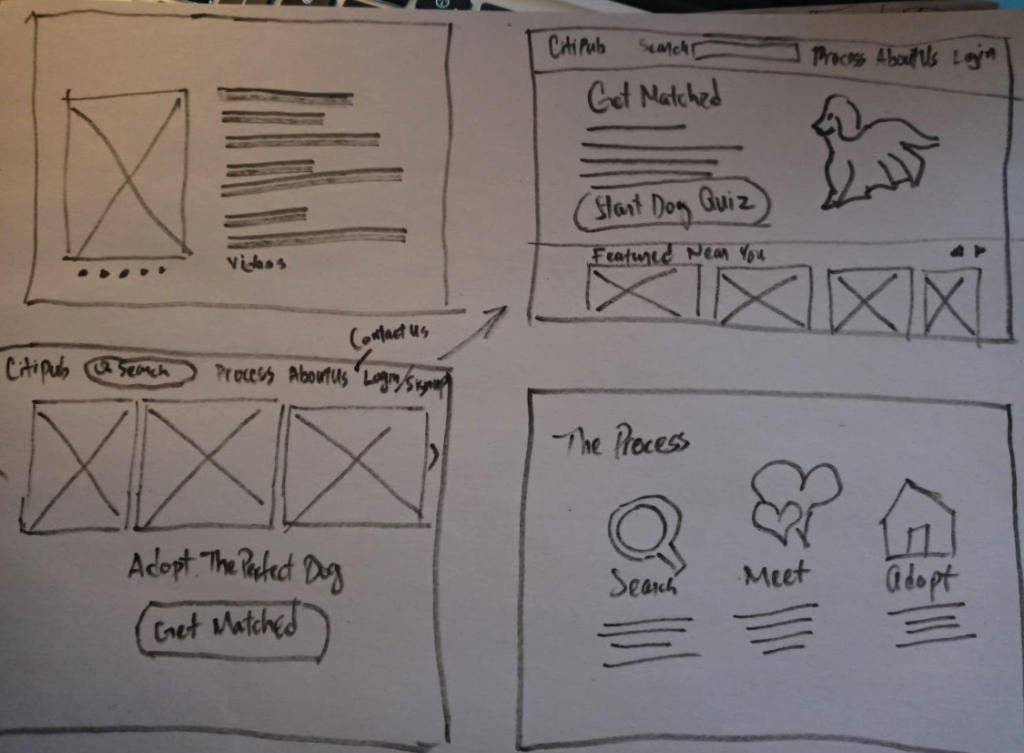
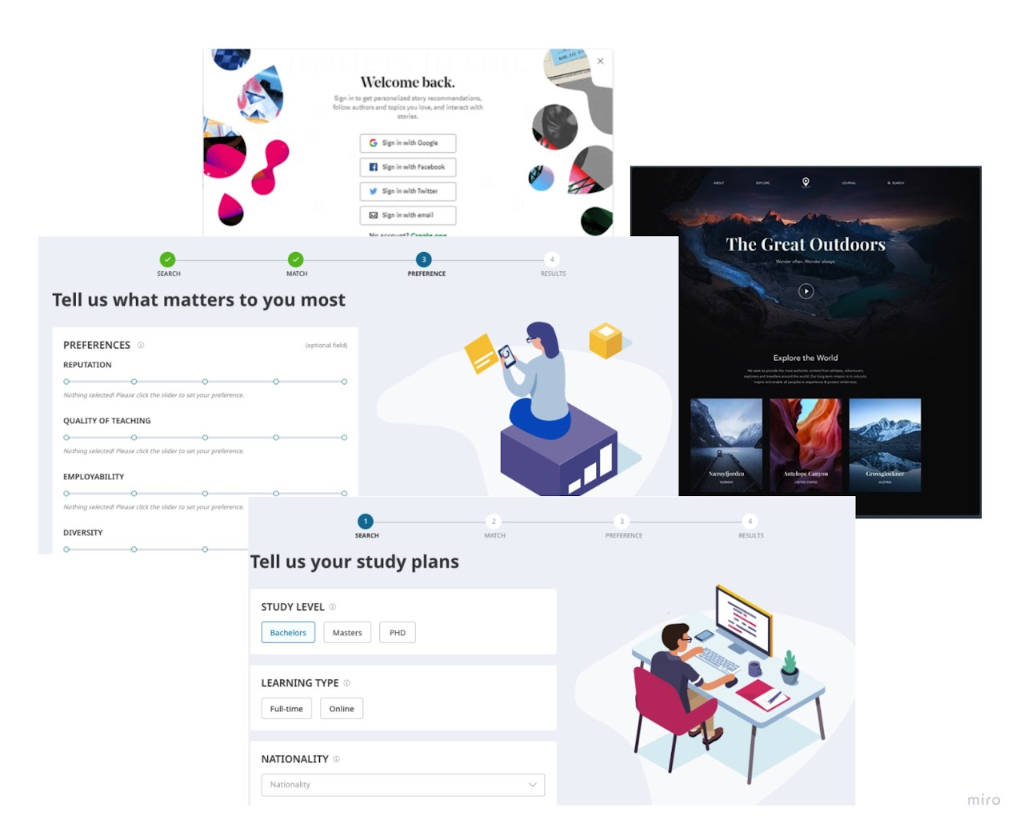
Inspiration scans of competitors and adjacent products fed quick eight-frame sketches. Volume over polish — the goal was to generate options fast, then critique cold.
Storyboarding the chosen path
One concept got a frame-by-frame storyboard covering CTA, matching flow, and adoption request — the spine the prototype would later follow.
Wireframes to Figma
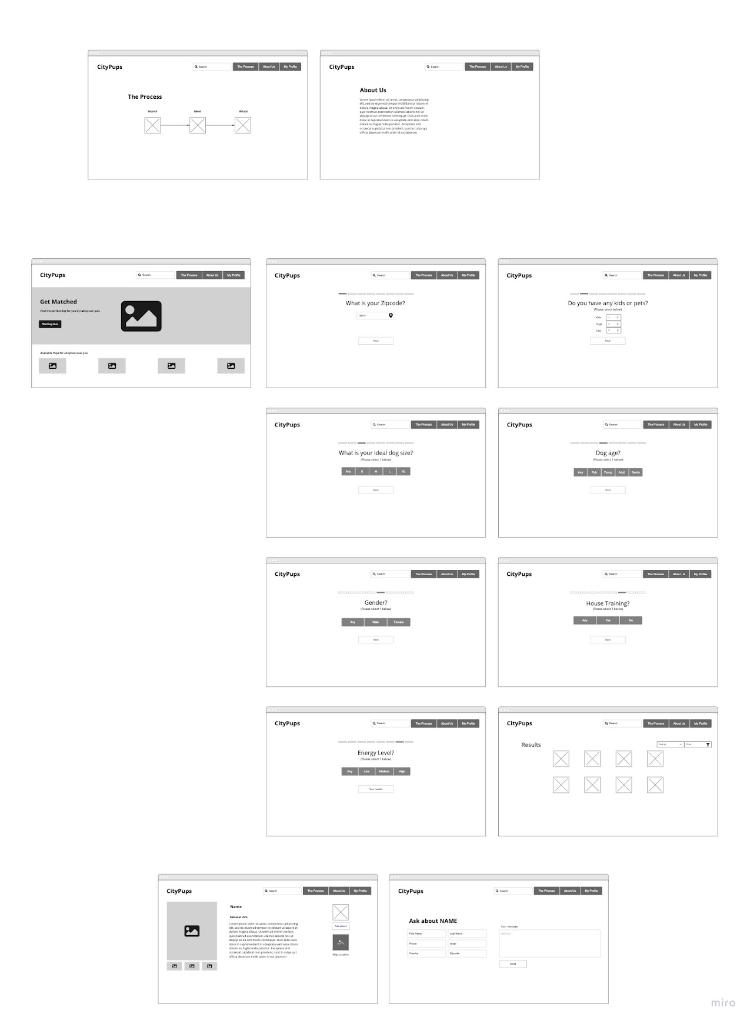
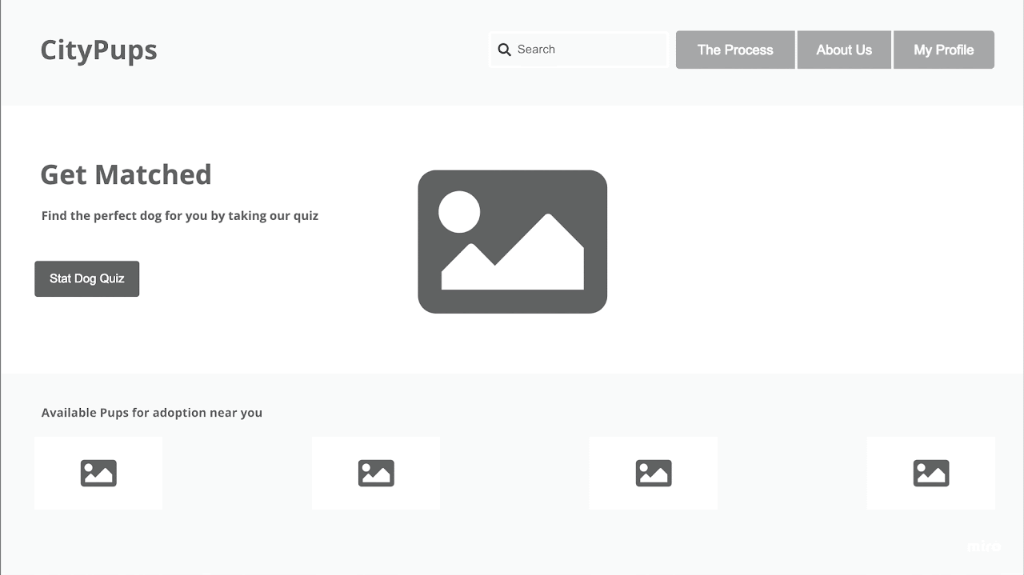
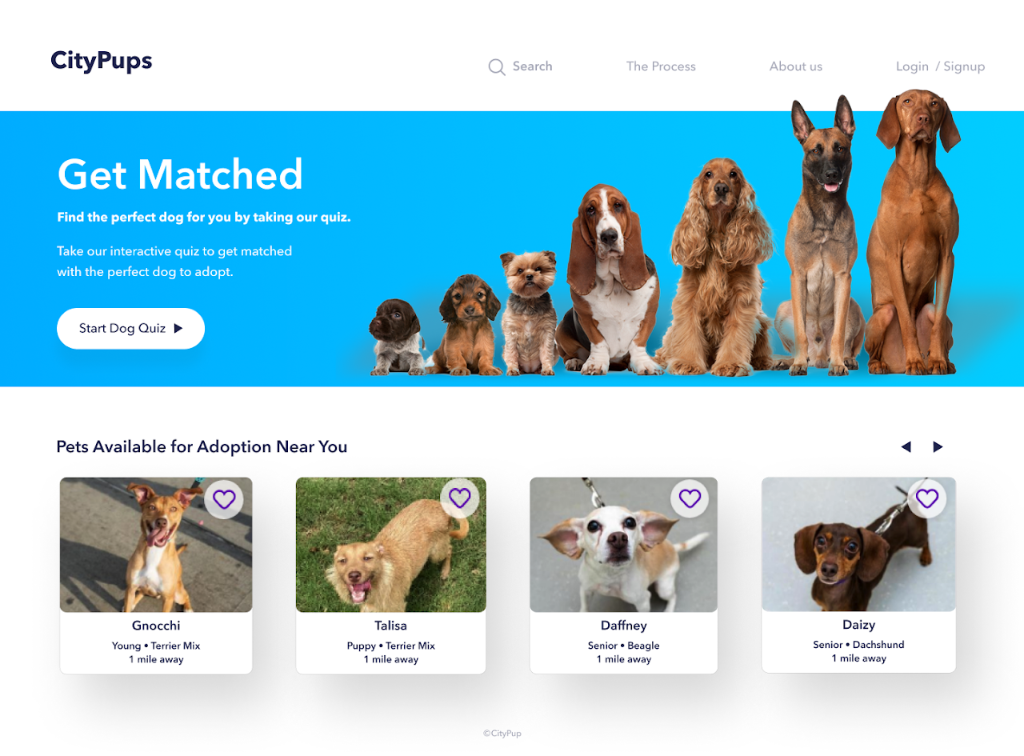
Three sections — landing CTA, matching tool, adoption request — wireframed first to lock layout, then promoted to a clickable hi-fi prototype in Figma.
Usability test with five users
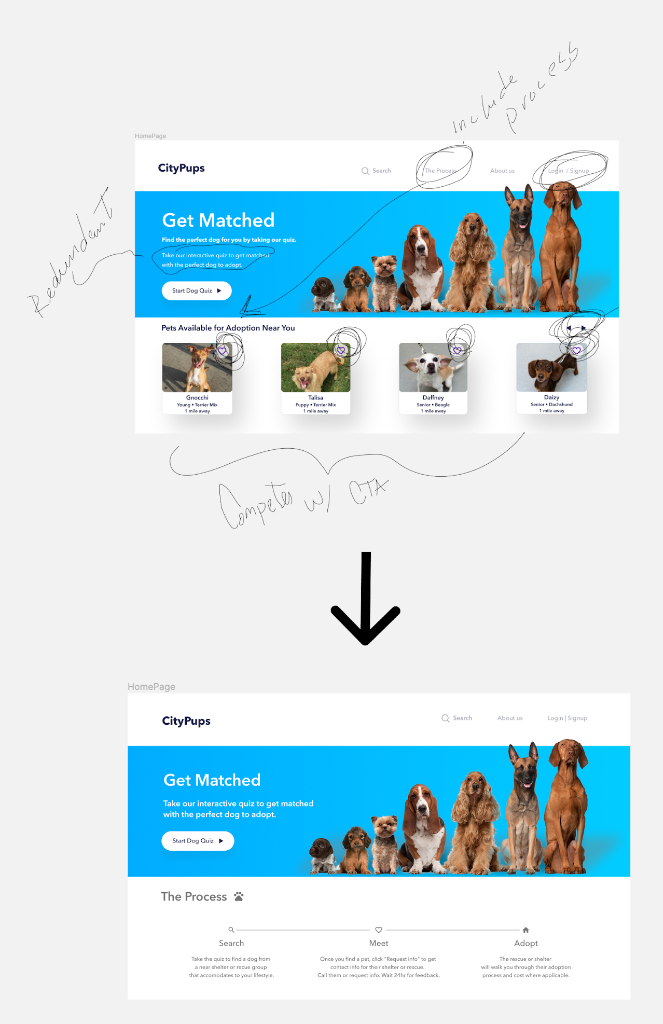
All five participants completed the core tasks. Notes called out the thorough interview framing; small copy and IA tweaks fed straight back into the prototype.
Gallery
Outcome
Five-of-five testers completed the core tasks with no major friction. The matching concept validated the riskiest assumption — that adopters would trust a guided shortlist over open browsing — and the framework discipline carried into later client work like RailBuild and Pergolade.
Reflection
The 5-day constraint taught me to prototype the riskiest assumption first, not the prettiest screen. If I ran this again I'd add 2–3 quick interviews with shelter staff — the provided research covered adopters but missed operational realities like approval timelines and capacity that would have reshaped the handoff.